9 Birth Prep Exercises to Get Your Pelvic Floor Ready for Labor

Preparing your body for birth is about more than just staying active during pregnancy. It’s about training the specific muscles and movement patterns that will help you during labor and delivery — especially your pelvic floor.
These are the exercises I give to my prenatal patients. They focus on three things: pelvic mobility, diaphragmatic breathing, and pelvic floor lengthening. The goal is to help your pelvic floor learn to relax and open, which is exactly what it needs to do during delivery.
You don’t need any special equipment — just a yoga block, a foam roller, and a pillow.
1. Anterior Pelvic Tilt
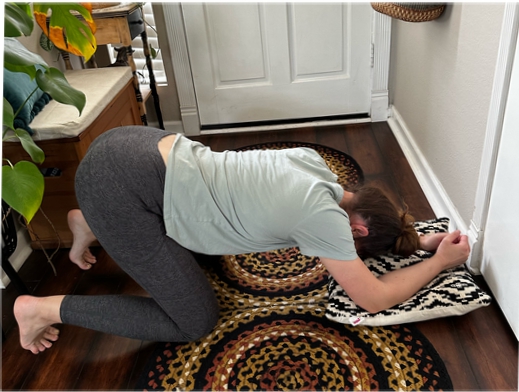
Rest on a pillow or foam roller with your forearms down to isolate your pelvis. Keep your back still and in a neutral position — the only thing moving is your pelvis. Push your glutes into the air to tilt your pelvis forward.
Combine this with the posterior pelvic tilt below for a smooth rocking motion.
10–20 reps, 2x/day
2. Posterior Pelvic Tilt
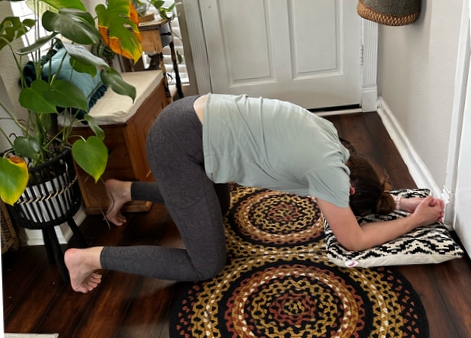
From the same position, keep your back neutral and still, and tuck your tailbone under. As you do this, zip up your core from the front of the pelvic floor to the belly button. This prevents doming of the abdomen and teaches your core and pelvic floor to work together.
10–20 reps, 2x/day
3. Back Breathing with Yoga Block
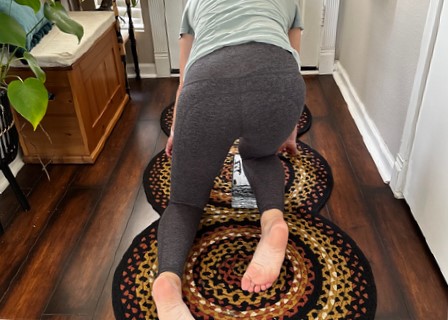
Place one leg on a yoga block. Make sure your hips are over your knees and shift about 80% of your weight onto the leg on the block. Then shift your weight back into your glute — you should feel a small stretch.
Now take 6 deep breaths into your back, focusing on feeling the pelvic floor expand with each inhale. This teaches your pelvic floor to lengthen, which is critical for birth.
6 deep breaths each side
4. Adductor Stretch
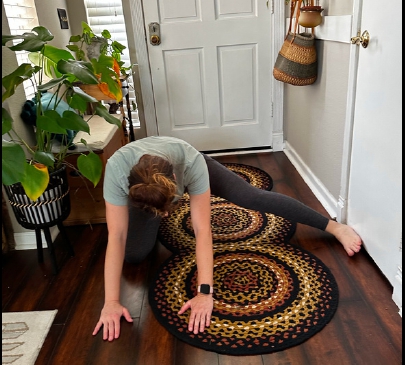
Kneel on one knee with your foot flexed, and have the other leg straight out to your side with toes pointed forward. Rock forward and back, feeling a stretch into your inner thigh. Your adductors connect to your pelvic floor, so keeping them mobile helps the pelvic floor move more freely during delivery.
10 rocks, 2x/day, both sides
5. Foam Roller Internal Rotation
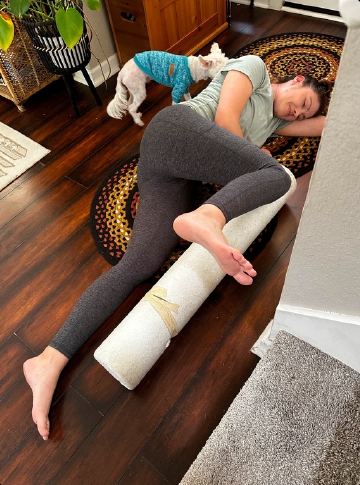
Lie on one side with a foam roller under your top leg at a 90-degree hip and knee position. Keeping your knee on the foam roller, just lift the bottom half of your leg and foot to internally rotate the hip. You can add a resistance band around the ankle for more challenge.
Internal rotation of the hip opens up the pelvic outlet — the space your baby passes through during birth.
3 sets of 10, 1x/day, both sides
6. Rotation with Foam Roller
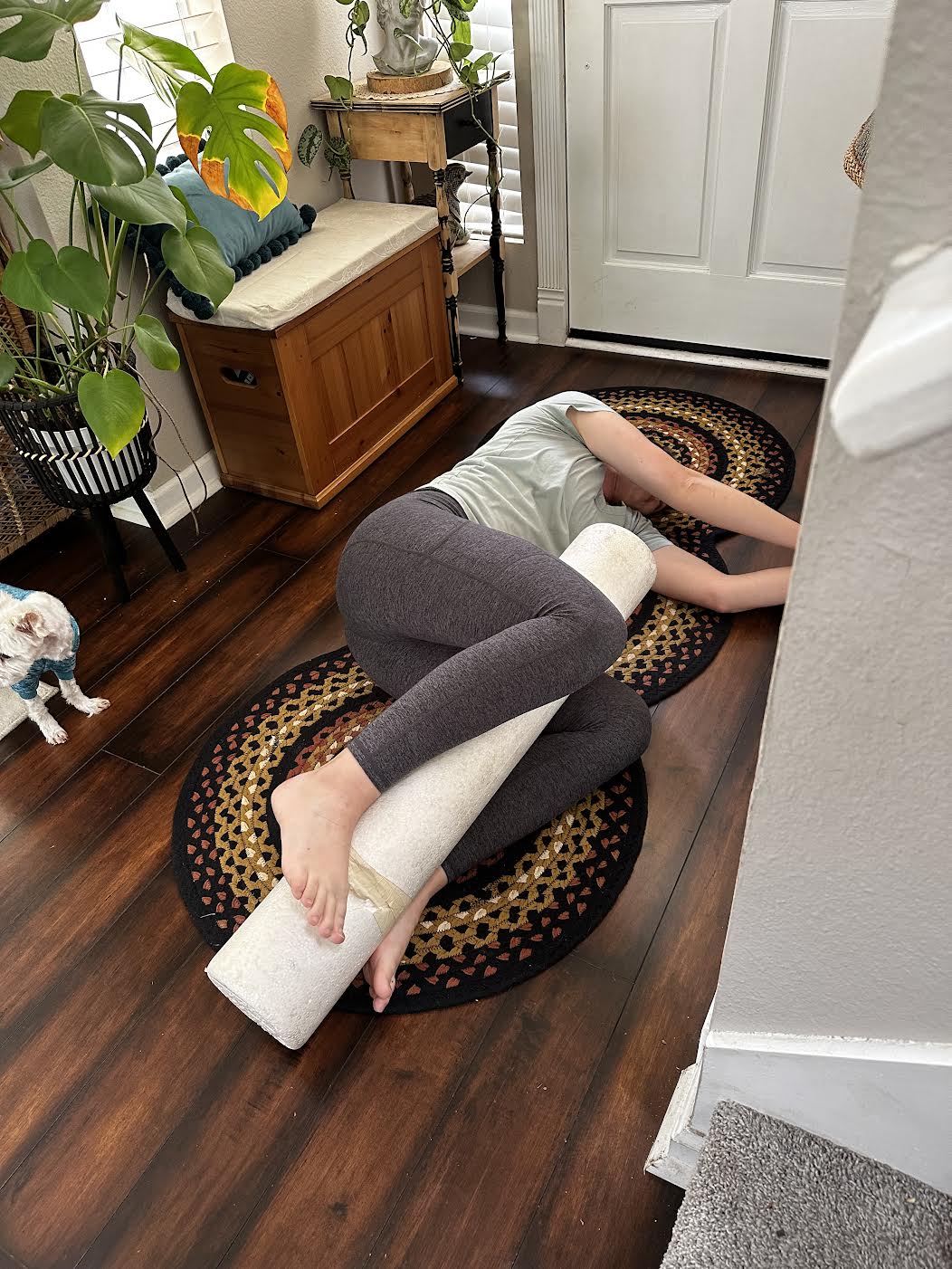
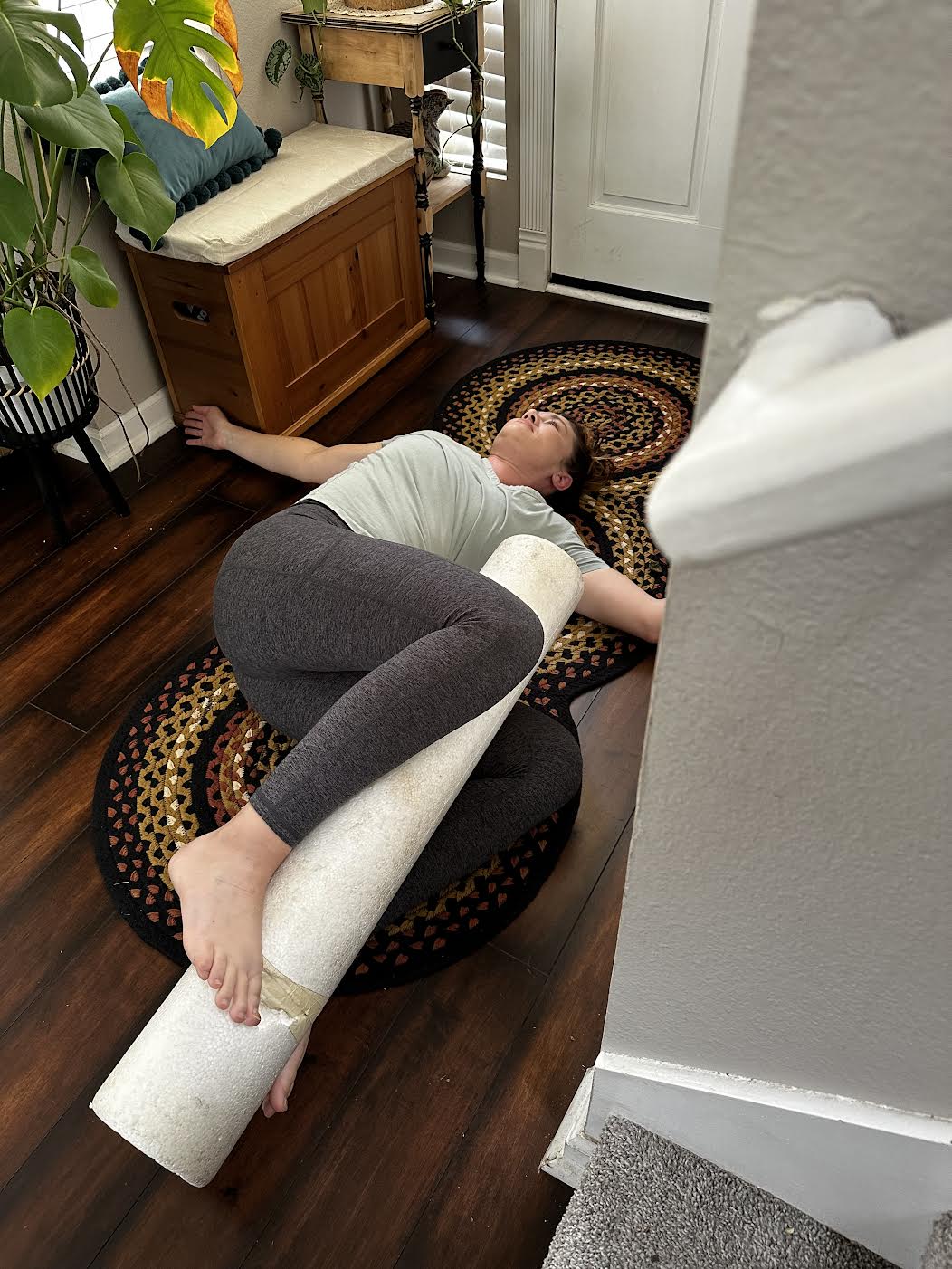
Lie on your side with hips at 90 degrees and a foam roller between your legs. Start with your hands together in front of you. Take a deep breath in, filling air into the side ribs facing up. As you exhale, open your top arm and rotate your body toward the ceiling.
This mobilizes the thoracic spine and ribcage, which directly affects how your diaphragm and pelvic floor work together.
8–10 reps, 2x/day
7. Deep Squat
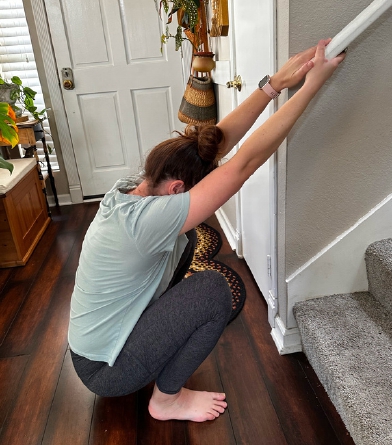
Hold onto a secure post or counter and sit back on your heels with your feet flat on the ground. Keep your shins relaxed — if they feel tight, move closer to whatever you’re holding onto.
Take a deep breath into your lower back and into your pelvic floor. Feel the pelvic floor expand. Deep squatting is one of the most effective positions for pelvic floor lengthening and is actually one of the best birthing positions.
5 breaths, 2x/day
8. Internal Rotation Rock Backs
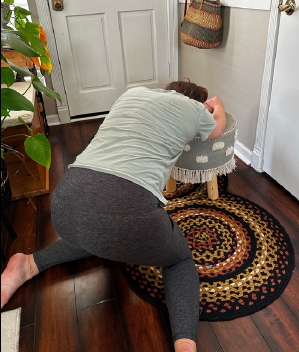
Rest your forearms on a stool or yoga ball. Have your knees together — this position opens the posterior pelvic floor. Rock back onto your legs, bending your knees with slow, controlled movements.
8–10 slow rocks
9. Child’s Pose with Pillow
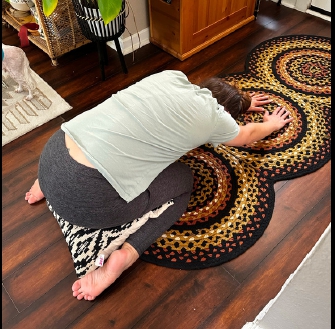
Try to keep your knees somewhat close together. Put a pillow under your bottom and sit back on the pillow, extending your arms in front of you.
Take deep breaths into your back and feel the pelvic floor expand. Breathe in for 5 seconds and out for 8–10 seconds. The extended exhale helps your pelvic floor fully relax.
5 breaths, 2x/day
Why These Exercises Matter
Most people think of kegels when they think of pelvic floor exercises — but during pregnancy and birth prep, the focus should be on lengthening and relaxing the pelvic floor, not just strengthening it. A pelvic floor that can’t relax has a harder time opening for delivery.
These exercises also address the hips, core, and breathing patterns that all work together with your pelvic floor during labor. That’s the whole-body approach I take with every patient.
When to Start
You can begin these exercises at any point during pregnancy, but they’re especially helpful in the third trimester as you prepare for labor. If you have any complications or pain, work with a pelvic floor physical therapist to modify the program for your body.
If you’re pregnant and want a personalized birth prep program, I offer one-on-one sessions — at your home, in my clinic in Rancho Bernardo, or over video. Every body is different, and a program tailored to your specific needs will give you the best preparation for birth and recovery.
Ready to Take Control of Your Pelvic Health?
Schedule a free 15-minute consultation to discuss your concerns.
Book Online